
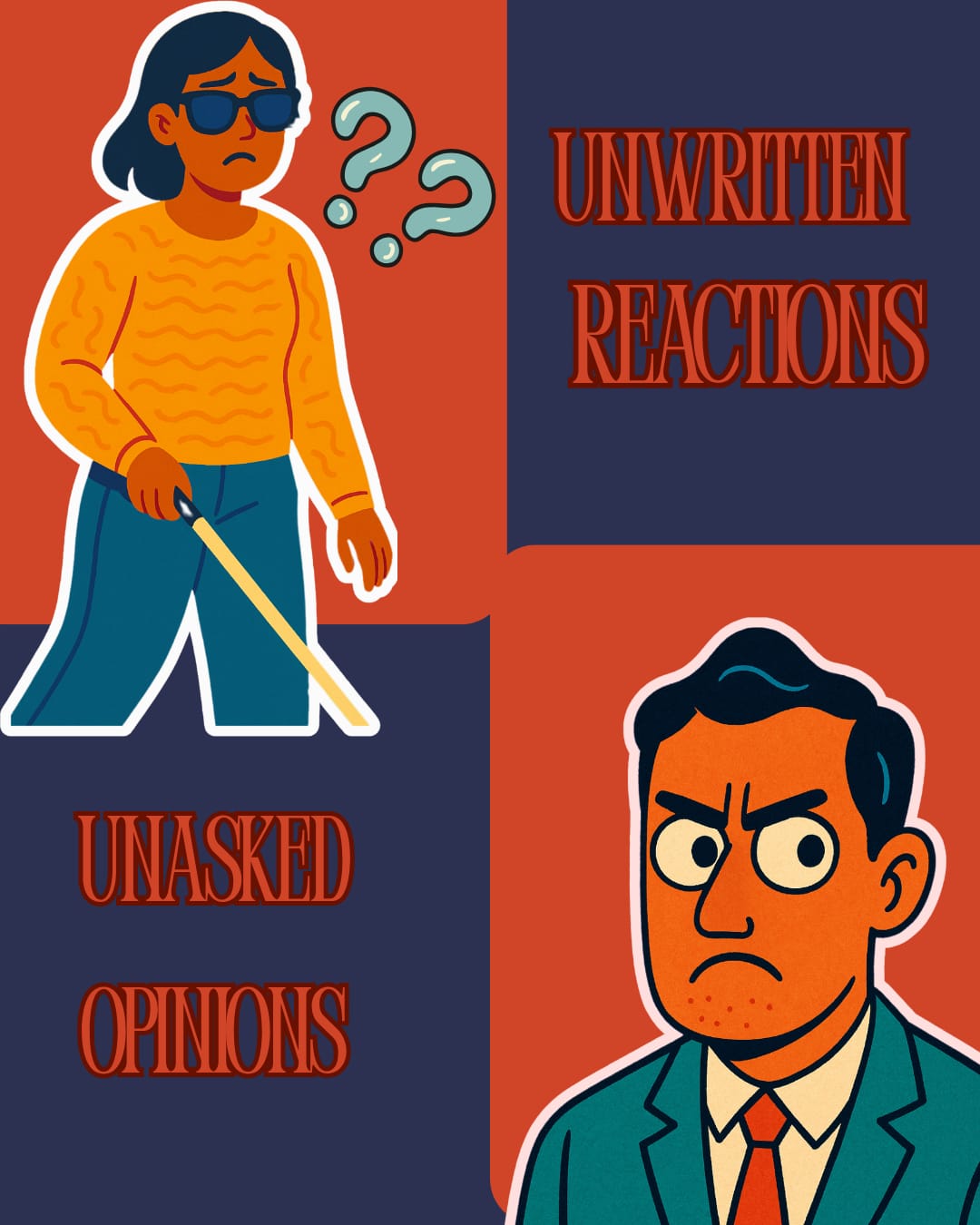
Priya was heading towards a conference room at the end of a long, narrow corridor in a corporate office for a meeting on a weekday morning. She was holding her laptop and headphones to her chest with her left hand, and clearing the path in front of her with a white cane in her right. It was her normal way of walking, as she lived with a visual impairment.
The sound of footsteps on the tiles and the ever-present smell of coffee filled the pathway.
Vikram, her colleague, was walking along with her, gently holding her right hand so she could match his pace. They were discussing the meeting’s agenda, occasionally laughing, cursing their boss or other colleagues. Priya was making a mental note of her talking points.
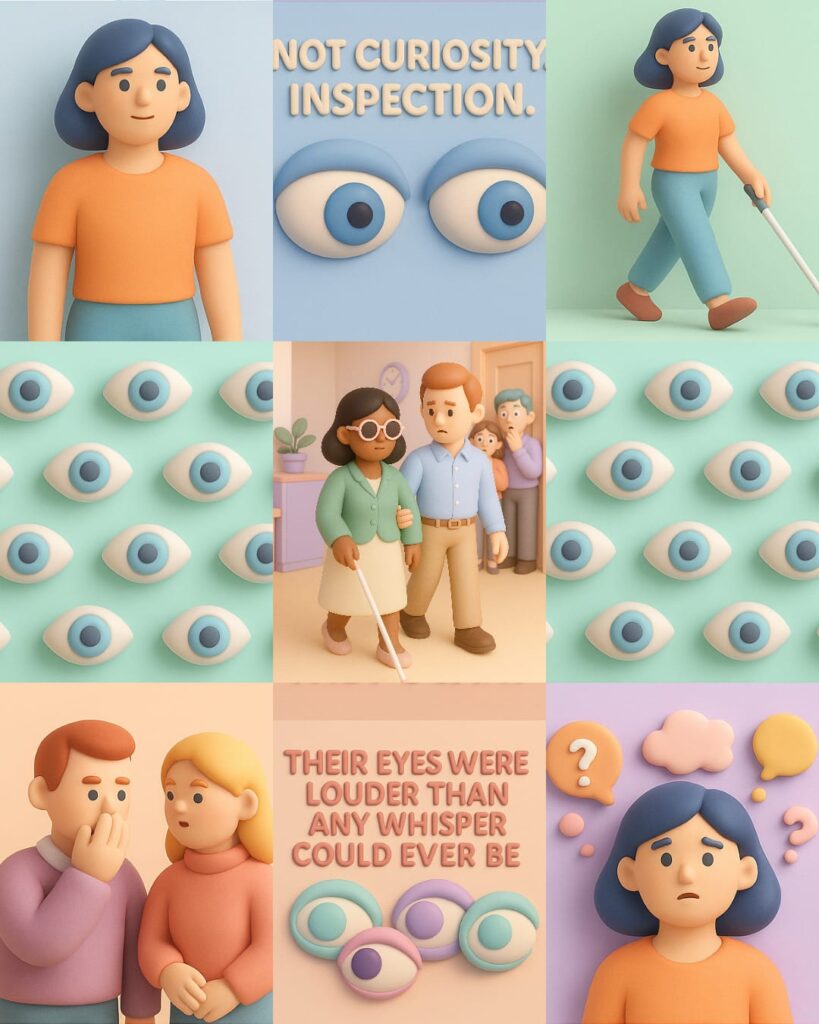
Suddenly, Vikram leaned close to her ear, and whispered, “People are staring at me as if I have committed a crime.”
The cane, the laptop, the headphones felt heavier. Her mind started drifting away.
Priya kept moving ahead, but the movement now felt involuntary. It was not the first time. Very often, whenever she was with her male friends or colleagues, they noticed people looking at them inappropriately. Every time, she froze like this, unsure what to say or do.
As she stepped out of the conference room after the meeting, walking with the same posture, her mind was now clouded unlike earlier. The once-familiar sound of footsteps on the office floor, people talking, phones ringing, the smell of coffee — it all felt different, unrelatable, alien to her now. She continued down the corridor, trying to slip back into normal, but things were not normal for her anymore.
“Something needs to be done about it. But I don’t know what,” she said to me after narrating the incident.
She sounded tired, uncertain, perhaps helpless.
Also Read: Difference is Natural, Exclusion is Not
Priya had done everything that was expected of her. She pursued her education despite financial obstacles, moved to a city far from home, carved out a life for herself, and worked hard to earn and keep her place in the office. Yet, even after all of this, many people still noticed her disability before they noticed her determination or independence.
And that is where the contradiction lies. We often say that dignity and equal treatment come from working hard, from proving ourselves. But even when people do work hard, sometimes harder than anyone realizes, the world can still hold on to the labels it gave them long ago. Priya grew up hearing that she should never think of herself as “less” because she couldn’t see. But when she finally began seeing herself beyond her disability, many around her still struggled to do the same.
Perhaps that was why the incident stayed with her, even in a workplace that often spoke about inclusion. It made her realise that despite all the effort she had put into building her life, some people still met her first through what made her visibly different. And it leaves us with a gentle but important question: if visible differences continue to shape how someone is seen, even after they’ve done everything asked of them, then what does inclusion truly ask of the rest of us?
Note: The experience mentioned in this post is real. It was shared with us by a woman with visual impairment. In order to keep her and her colleague anonymous, we have called them Priya and Vikram.